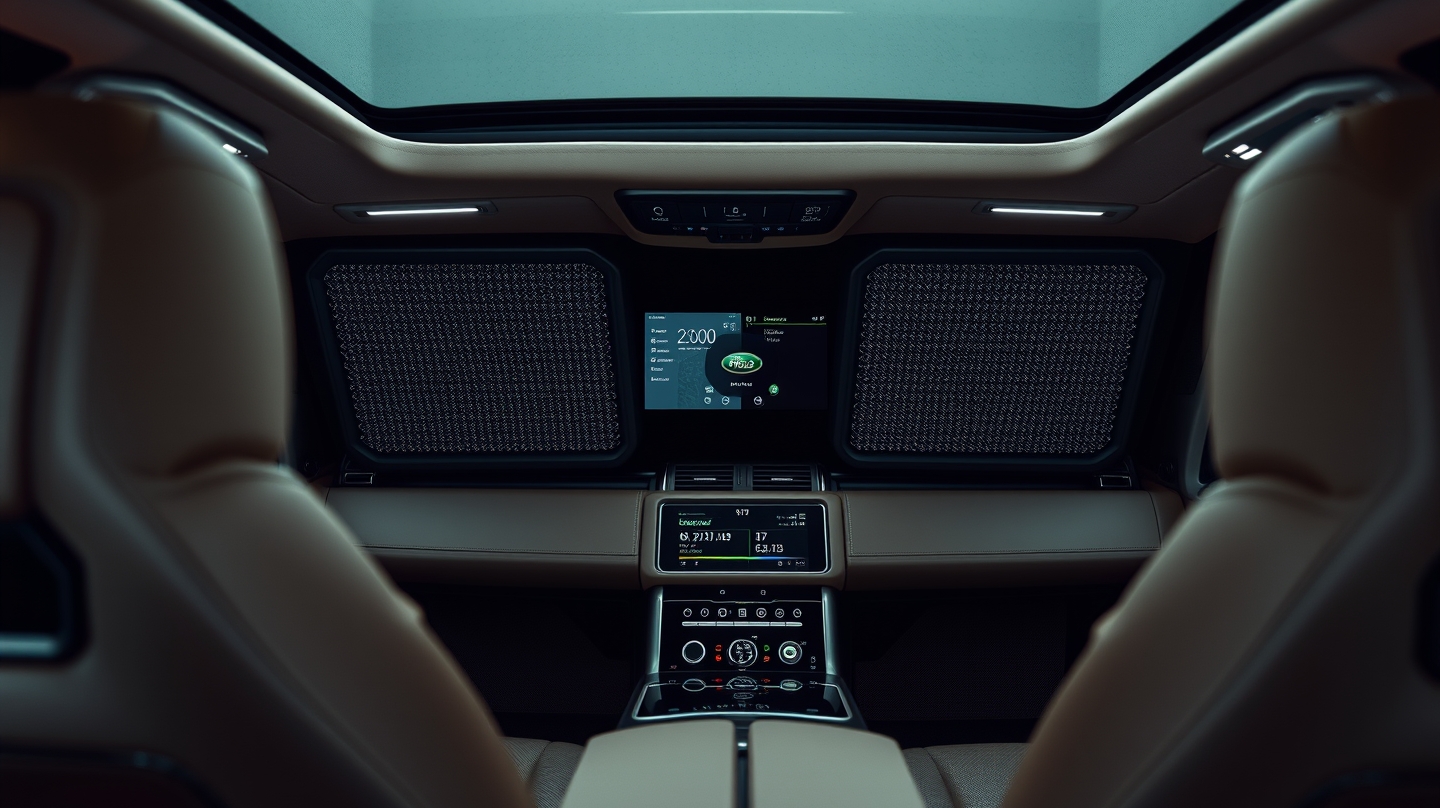
When Land Rover unveiled the 2027 Range Rover SV Ultra, the headline‑grabbing feature wasn’t a new engine but a silent, ultra‑thin speaker system that turns the cabin into a three‑dimensional soundstage.
The British automaker partnered with Warwick Acoustics to replace conventional cone‑type drivers with electrostatic panels mounted in the headrests and roofline. Unlike magnetic voice‑coil speakers, electrostatic units use a charged membrane sandwiched between two metal frames; an audio signal makes the membrane vibrate, producing sound directly from a surface that is both lightweight and exceptionally thin.
Land Rover claims the new panels are “1,000 times more responsive” than traditional drivers, a figure that reflects the speed at which the membrane can start and stop moving. The reduced mass also means the panels can be placed where sound‑reflection is optimal, creating a uniform sound field that fills the cabin without a single audible source.
Beyond the speakers, the SV Ultra adds haptic floor and seat panels—dubbed “Body and Soul Seats”—that translate low‑frequency energy into tactile feedback. The feature can be turned off, but when active it lets occupants feel bass without the blare of a large subwoofer.
Pricing places the SV Ultra at $255,350, with the electrostatic stereo offered as a $12,570 option. While the cost limits the technology to the high‑end market, the move signals a broader trend: car manufacturers treating the interior as a media platform rather than a mere transport space.
From an industry perspective, the adoption of electrostatic audio mirrors how consumer electronics have migrated from bulky hardware to integrated, software‑driven experiences. Automakers are now integrating over‑the‑air updates, AI‑based sound personalization, and even cloud‑linked streaming services—areas where companies like Meta are already active through its automotive AI and AR initiatives.
For consumers, the immediate implication is clearer: future vehicles may prioritize acoustic fidelity alongside safety and efficiency. Dealerships will need to train staff on audio calibration, and aftermarket suppliers could see demand for retrofit electrostatic kits, especially as electric vehicles free up space previously occupied by exhaust systems.
Structurally, the thin speaker panels free up volume that designers can allocate to other functions—additional battery modules in EVs, advanced driver‑assist sensors, or even more generous cabin storage. The technology also reduces weight, contributing modestly to overall efficiency.
In sum, Land Rover’s electrostatic system is less about a single luxury feature and more about how automotive interiors are evolving into fully immersive media environments. As the line between car and living room blurs, the industry’s supply chain, software infrastructure, and even regulatory frameworks will need to adapt.