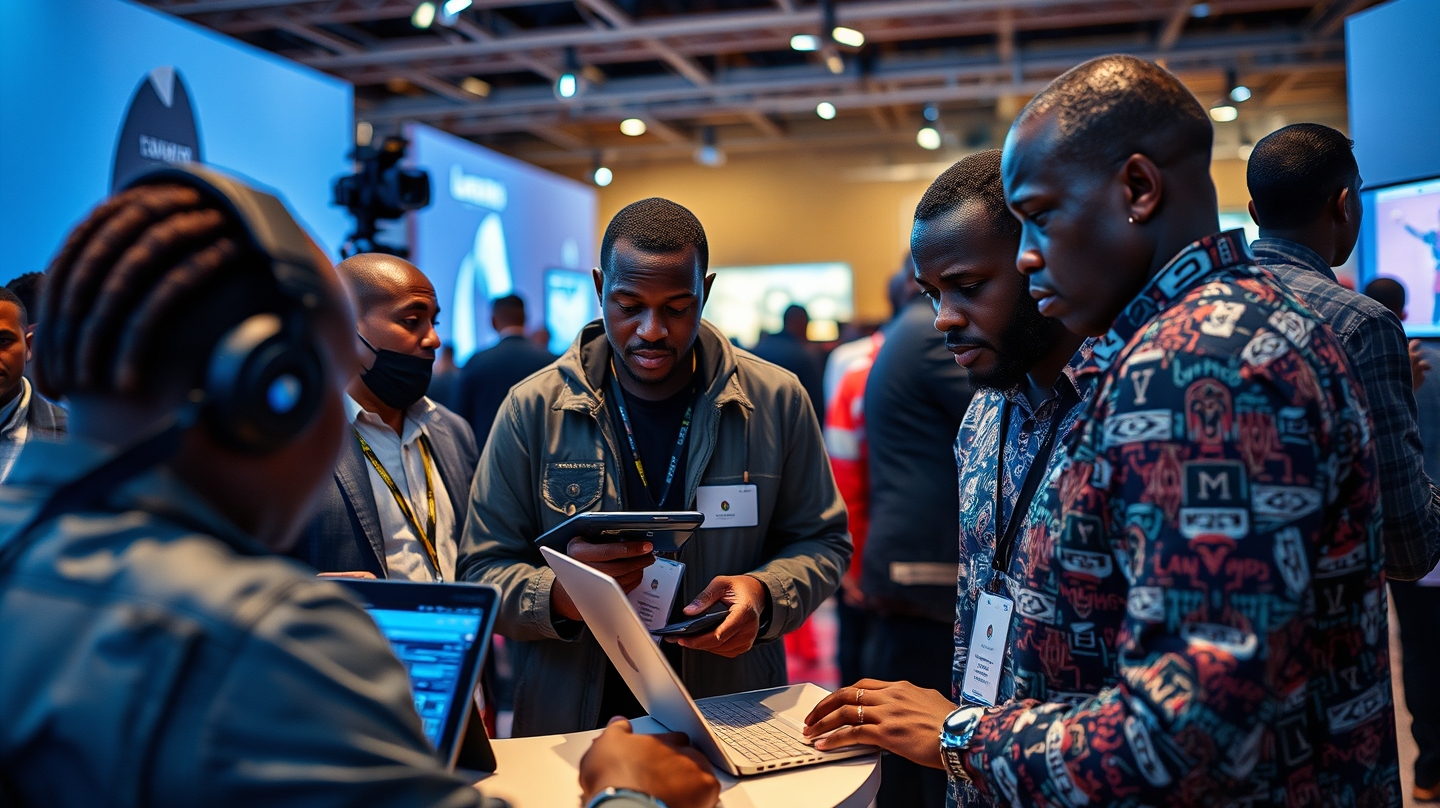
When the rolling hills of Locarno host a gathering of African filmmakers, the conversation isn’t just about stories on screen—it’s about the software that makes those stories possible. The Open Doors 2026 program, a co‑production platform aimed at creators from equity‑seeking communities, has assembled six producers from Zimbabwe, Côte d’Ivoire, Cabo Verde, Burkina Faso, Nigeria and Sudan, each bringing a distinct blend of cultural vision and digital know‑how.
The six participants—Tapiwa Chipfupa, Adja Mariam Mahre Soro, Natasha Craveiro, Mamounata Nikiema, David Ikeata and Rua Osman—will spend a week in Switzerland receiving hands‑on training, mentorship and networking. Beyond the usual pitch sessions, the curriculum now dedicates a full day to automation‑driven workflow tools, from AI‑assisted script breakdowns to cloud‑based post‑production suites. "We see producers acting like entrepreneurs," explains Yanis Gaye, head of studies at Open Doors, "and technology is the catalyst that lets them scale those ventures across borders."
For Chipfupa, whose Zimbabwean outfit Ambidextrous Pictures recently launched the Audiovisual Entrepreneurs Laboratory, the promise of automated budgeting software means less time on spreadsheets and more on story development. "The online program already curated resources around me," he said, noting how a machine‑learning platform matched his project with potential co‑producers in Europe.
Soro’s animation studio, Studio Kä, relies on procedural generation tools that speed up the creation of background assets. In an industry where hand‑drawn frames can double production time, such automation cuts costs and opens doors to longer series contracts with streaming services. Craveiro, representing Cabo Verde’s Korikaxoru Films, highlighted a recent partnership with a cloud‑render farm that allowed her team to finish visual effects for "Omi Nobu" without building a local render farm—a model she hopes to replicate for future projects.
Beyond individual efficiencies, the program’s structure itself reflects a shift toward a distributed production ecosystem. By linking participants with Swiss post‑production houses, African fintech providers and European distribution networks, Open Doors creates a cross‑border supply chain that mirrors the automation pipelines used in tech startups. This model reduces reliance on a single national infrastructure, a point Gaye emphasizes: "When local industry faces challenges, producers must build their own ecosystem, and technology is the scaffolding."
The real‑world implications are already visible. After the 2025 Open Doors screenings, several African titles secured digital distribution deals on platforms that use algorithmic curation to match niche audiences with regional content. For the Sudanese producer Rua Osman, this means that a film like "Goodbye Julia" can reach viewers in the Middle East without the traditional theatrical window, thanks to automated rights‑management tools.
From a broader perspective, the integration of automation into African film production aligns with a global trend: media companies are adopting AI‑driven pipelines to accelerate content delivery and lower costs. As streaming giants invest in localized storytelling, producers who can demonstrate efficient, tech‑savvy workflows become attractive partners. The Open Doors program, therefore, is not just a cultural exchange—it is a training ground for the next generation of media entrepreneurs who understand both narrative and the digital infrastructure that carries it.
For the six producers, the week in Locarno represents a chance to test these tools in a high‑stakes environment, to network with European peers, and to showcase their work beyond the familiar football narrative often associated with their countries. As Craveiro put it, "People still think of Cape Verde as football, but we have cinema too, and now we have the technology to tell those stories globally."