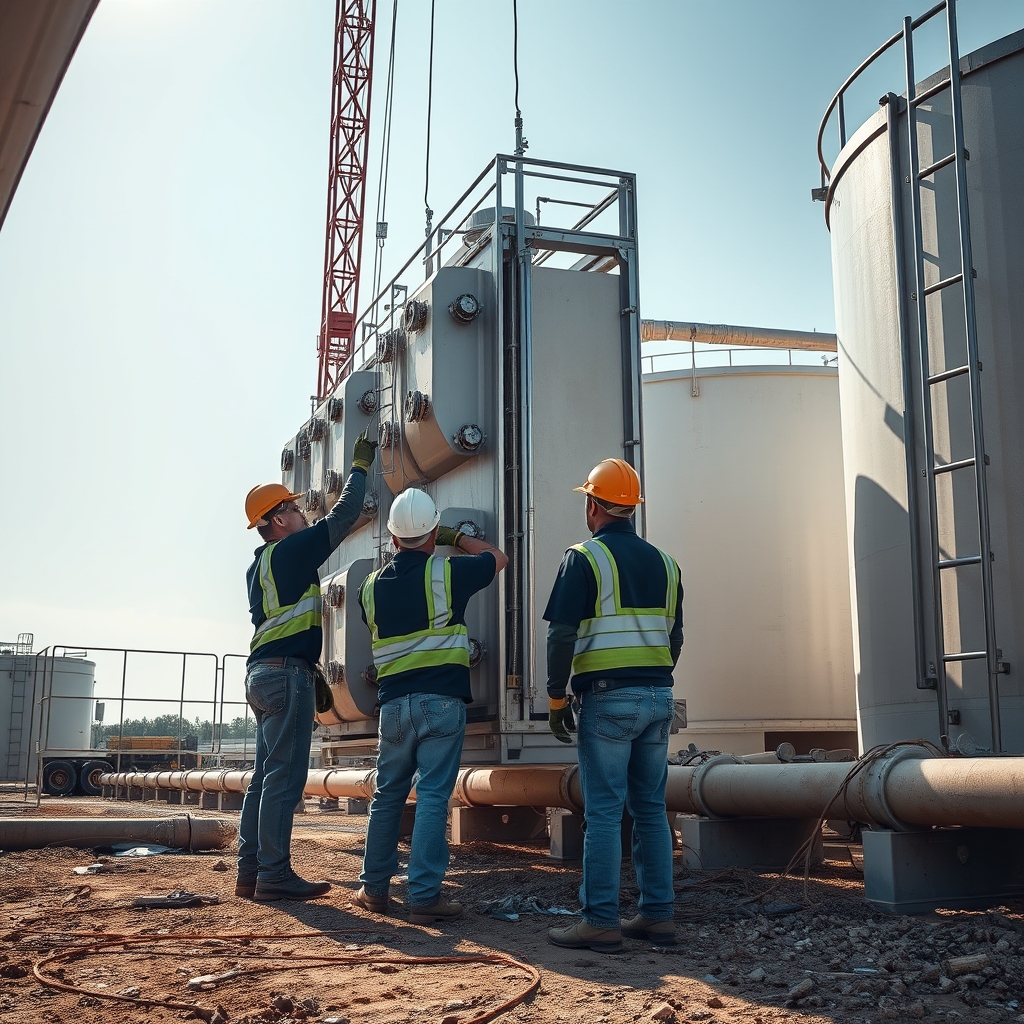
When Sundt Construction broke ground on the Pecan Creek Water Reclamation Plant expansion last Tuesday, the ceremony was marked not by fanfare but by a quiet promise: to keep the existing plant humming while a massive new treatment line comes online. The promise reflects a broader shift in Texas water infrastructure, where rapid population growth forces utilities to upgrade at pace without compromising service.
The $92 million guaranteed‑maximum‑price contract, awarded by the City of Denton in February, tasks Sundt with building a 75‑million‑gallon‑per‑day headworks facility and a 30‑million‑gallon‑per‑day membrane bioreactor (MBR) buildout. In addition, the firm will upgrade underground utilities and retrofit parts of the original plant footprint. "Through advanced treatment solutions and strategic phasing, we're delivering critical improvements while keeping the existing facility fully operational and untouched throughout the construction of their new improvements," said Matt Bothun, Texas regional manager for Sundt’s water and wastewater group.
Why does this matter? Denton’s 2020 census counted roughly 150,000 residents, but city planners project a surge past 200,000 by 2030. The added capacity will allow the wastewater system to handle the extra load, reducing overflows and improving effluent quality for downstream ecosystems. For homeowners, the upgrade translates into fewer service disruptions and a more reliable sewer system—an essential component of everyday life that often goes unnoticed until it fails.
The project also illustrates how technology is reshaping traditional water‑treatment workflows. The MBR technology Sundt is installing combines membrane filtration with biological treatment in a single, compact unit, delivering higher-quality effluent while using less space than conventional systems. Automation plays a central role: sensors monitor membrane fouling in real time, and control algorithms adjust airflow and backwash cycles without human intervention. This reduces labor costs, shortens response times to operational issues, and extends membrane life—benefits that echo across the broader construction and utilities sectors.
Texas has become a hotbed for water‑related contracts over the past year. Ferrovial secured $721 million in projects across Austin and Fort Worth, Burns & McDonnell won an $80 million reclamation job in San Marcos, and Crescent Constructors—now part of Zachry Construction—landed an $89 million expansion in Lewisville. Together, these deals signal a market shift toward large‑scale, technology‑heavy water projects, driven by demographic pressure and stricter environmental standards.
From an industry perspective, the Denton expansion underscores a move toward modular, automated treatment plants that can be phased in without halting existing operations. This structural insight—building new capacity while preserving current service—offers a template for municipalities facing similar growth challenges. It also reduces the financial risk of downtime, a key metric for city budgets and ratepayers.
Real‑world implications extend beyond Denton. By adopting MBR and automated controls, the plant will produce higher‑quality reclaimed water suitable for non‑potable uses such as irrigation and industrial cooling. In a state prone to drought, reclaimed water eases pressure on freshwater sources, supporting sustainable development and potentially lowering utility bills for residents.
Looking ahead, the Denton project may accelerate adoption of similar technologies across the Southwest. As more utilities witness the operational efficiencies and environmental gains, procurement decisions are likely to favor contractors who can deliver integrated, automated solutions. This trend aligns with a broader industry transformation where digital monitoring, AI‑driven optimization, and modular construction converge to create faster, more resilient infrastructure.