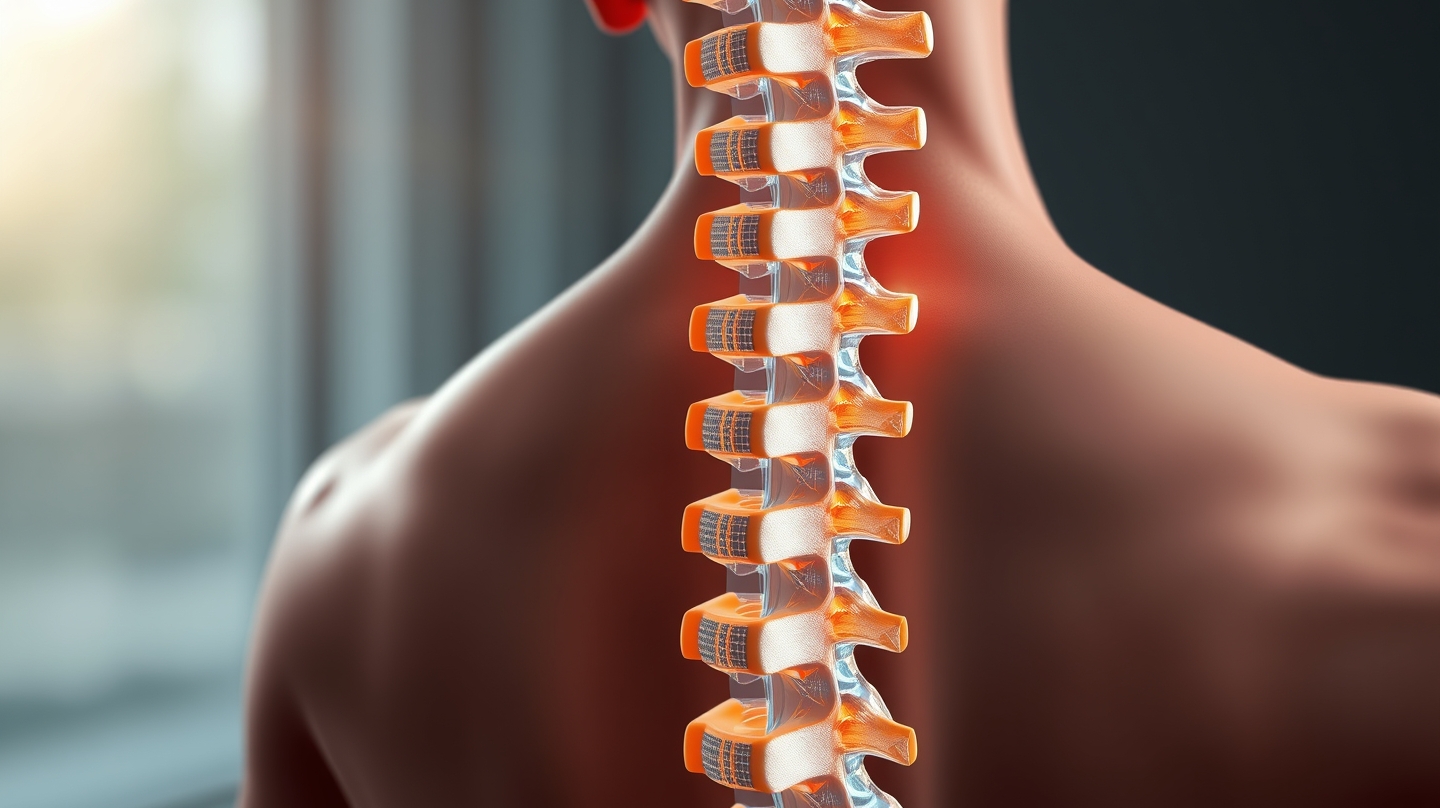
When you sit at a desk and feel a twinge in your lower back, you are feeling the echo of a tree‑dwelling ancestor whose spine was never meant to bear the weight of a bipedal life. That same mismatch—an organ or nerve that works well enough but not optimally—underpins many common ailments, from chronic back pain to voice‑box injuries during surgery.
Evolution does not start from a blank slate; it repurposes existing structures. The human spine, for example, retains the flexible beam of a quadrupedal primate while being forced to support an upright torso. The resulting S‑shaped curves distribute weight but also create zones of stress that predispose millions to disc herniations and degenerative disease. Similarly, the recurrent laryngeal nerve takes a circuitous route around the aorta—a detour inherited from fish that once needed to loop around gill arches. In modern humans the nerve’s length makes it vulnerable during thyroid or cardiac surgery.
Even our eyes betray evolutionary shortcuts. Light must travel through several layers of nerve fibers before reaching photoreceptors, a layout that limits visual acuity and contributes to age‑related macular degeneration. These imperfections are not failures; they are compromises that allowed our ancestors to survive long enough for us to exist.
Why does this matter beyond anatomy textbooks? The answer lies in how technology is turning evolutionary hindsight into forward‑looking solutions. AI‑driven imaging platforms now map spinal curvature with millimeter precision, flagging early signs of degeneration before pain becomes chronic. Machine‑learning models trained on millions of retinal scans can predict the onset of diabetic retinopathy, offering interventions that bypass the anatomical bottleneck of a “back‑to‑front” retina.
Automation is also reshaping the way medical knowledge spreads. Newsrooms increasingly rely on natural‑language generation to summarize peer‑reviewed studies, ensuring that complex evolutionary explanations reach clinicians and the public quickly. This workflow transformation reduces the lag between discovery and application, a critical factor when dealing with conditions that affect billions.
From a broader perspective, the body’s design flaws illustrate a market shift: healthcare providers are investing heavily in technologies that compensate for evolutionary constraints. Wearable sensors that monitor spinal load in real time feed data into cloud‑based analytics, prompting ergonomic adjustments for office workers. Surgical robots, guided by high‑resolution 3D reconstructions, navigate the tangled path of the recurrent laryngeal nerve with reduced risk of accidental damage.
These developments connect to a larger trend of automation‑driven infrastructure in the medical media ecosystem. As algorithms curate and distribute health content, they also flag misinformation about “perfect design” myths, reinforcing evidence‑based narratives. The result is a feedback loop where scientific insight, technology adoption, and public understanding reinforce each other.
In practical terms, the convergence of evolutionary biology and modern automation means fewer missed diagnoses, less invasive procedures, and a potential reduction in the global burden of musculoskeletal disorders. It also underscores a cultural shift: we are no longer passive recipients of our anatomical heritage; we are active engineers, using data and machines to rewrite the story of the human form.