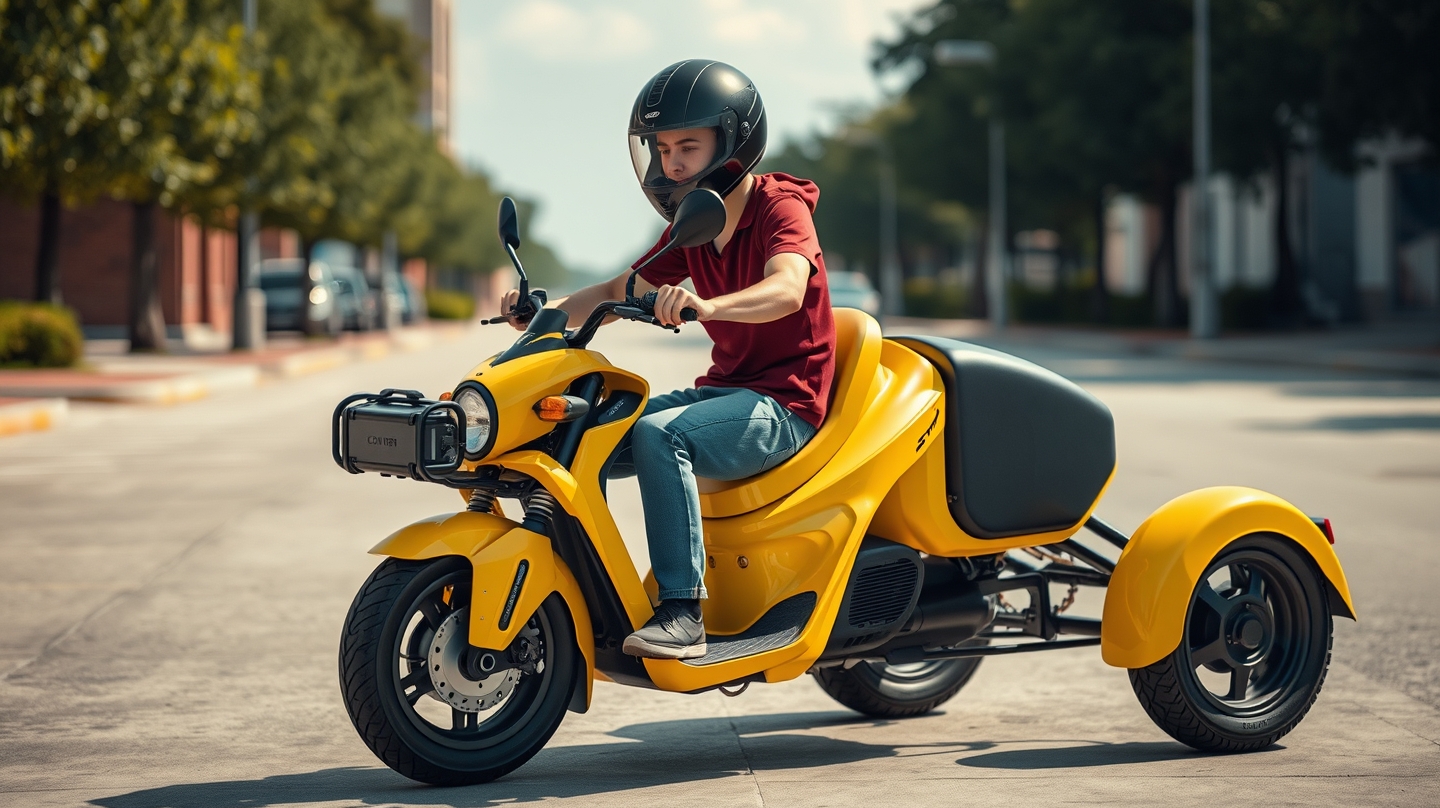
When a 1990s‑era electric three‑wheeler rolls onto a digital auction site, the contrast between its quirky silhouette and the sleek, data‑driven world of online marketplaces is impossible to ignore. The 2000 Corbin Sparrow, a banana‑yellow single‑seat EV that once sprinted at 165 mph on a battery‑powered motorcycle, is now listed on Bring a Trailer with an auction deadline of August 11, inviting collectors, EV enthusiasts, and a new generation of digital creators to bid.
The Sparrow was the brainchild of Mike Corbin, a former Navy electrician turned motorcycle customizer. In 1974, amid a global fuel crisis, Corbin piloted his Quicksilver electric motorcycle to a land‑speed record of 165 mph—a benchmark that held for nearly four decades. Building on that expertise, he introduced the Sparrow in the early 1990s as a practical, weather‑proof alternative to a two‑wheel bike. Its design—compact, low‑profile, and unmistakably whimsical—earned cameo status in the Austin Powers film series, where it served as the villain Goldmember’s eccentric transport.
Despite its novelty, the original Sparrow never achieved commercial success. Heavy lead‑acid batteries limited range and added weight, and the market for single‑seat electric runabouts was nascent at best. Yet the vehicle’s underlying concept—an affordable, space‑efficient commuter for congested cities—has resurfaced in modern offerings like the ElectraMeccanica Solo. Today’s lithium‑ion packs are lighter, cheaper, and far more energy‑dense, turning the Sparrow’s once‑impractical design into a viable prototype for ultra‑compact urban mobility.
The auction itself underscores a broader shift in how automotive history is curated and monetized. Bring a Trailer, owned by Hearst Autos, operates entirely online, leveraging community‑driven commentary, high‑resolution imagery, and algorithmic pricing tools. This digital platform replaces the traditional print classifieds and dealer lot showrooms that once dominated vehicle sales. For the Sparrow, the move from a Fort Worth museum shelf to a global bidding arena illustrates the migration of niche collectibles from physical to digital realms—a trend that mirrors the entertainment industry’s own pivot from cinema screens to streaming services.
That migration fuels the creator economy. Enthusiasts who document restoration projects, produce video walk‑throughs, or write in‑depth analyses can monetize content through ad revenue, sponsorships, and direct fan support. The Sparrow’s restoration potential—replacing its obsolete lead‑acid cells with a modern 10 kWh lithium‑ion pack—offers a compelling narrative for creators seeking to blend nostalgia with cutting‑edge technology. Each successful rebuild not only revives a piece of EV heritage but also generates shareable content that drives traffic to platforms like YouTube, Instagram, and niche forums.
Beyond the media angle, the Sparrow’s resurgence has tangible implications for urban transportation policy. Cities worldwide are grappling with congestion, emissions, and limited parking. A lightweight, single‑seat electric vehicle occupies a fraction of a car’s footprint, can be parked in a standard bicycle rack, and delivers zero tailpipe emissions. If a modestly priced, modernized Sparrow could be produced at scale, it would provide municipalities with a practical tool for reducing car dependency without the infrastructure demands of larger EVs.
While the auction price remains undisclosed, the very act of listing the Sparrow signals that legacy EV concepts are being re‑examined through the lens of today’s technology and digital commerce. Whether the vehicle finds a new owner who restores it to road‑ready condition or remains a museum piece, its appearance on Bring a Trailer bridges the gap between 20th‑century experimental engineering and 21st‑century digital culture.
In short, the Corbin Sparrow is more than a novelty; it is a case study in how automotive innovation, media distribution, and creator‑driven economies intersect. Its journey from a lead‑acid‑powered oddity to a potential lithium‑ion commuter encapsulates the broader narrative of electric mobility’s evolution and the ways digital platforms are reshaping how we discover, value, and repurpose technological artifacts.